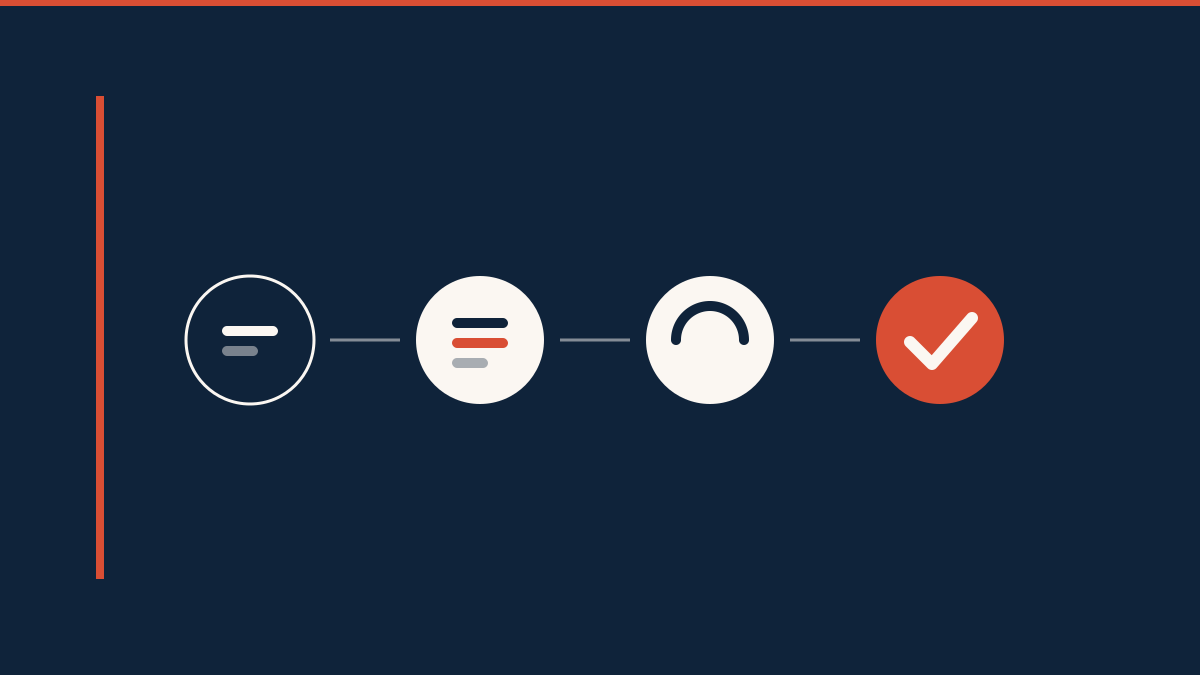
The room attendant spots the dripping tap at 10:40. The technician hears about it at 17:00, if at all. In between, the report has travelled through a note on the trolley, a word in the linen room and a call to the front desk. Room faults are rarely lost for lack of goodwill: they are lost in the handovers. This guide sets out a short circuit so that every report has one place, one owner, one status and a checked close.
One report, one place
The first failure usually happens at the way in. A fault arrives from the room attendant, from the inspection, from the front desk, from the guest or from the technician walking down the corridor, and each of them tells it through a different channel: a paper slip, a remark in the linen room, a phone call. If every channel ends somewhere different, nobody sees the full list. Choose a single place where every report is logged, whether a notebook, a shared sheet or a tool, and ask anyone who hears about a fault another way to log it there before carrying on.
What to write down
Five details are enough: the room or area, what was seen in one sentence, who spotted it, which channel it came through and when. With that, anyone can pick the report up without having to ask. Anything that does not help locate or repair the fault is surplus, and the guest’s details are not needed to replace a tap.
Duplicates, not noise
The same broken blind can arrive three times: from the room attendant, the guest and the front desk. That is not three faults. Link repeated reports to a single case and note why you linked them, so nobody reopens them thinking they are new.
Whoever logs it, signs it
Every report should say who logged it and at what time. It is not about finding someone to blame; it is about knowing whom to ask when a detail is missing.
Classify before calling the technician
A report is not yet a work order. Before sending anyone, someone with judgement, usually maintenance or the head housekeeper, decides what kind of fault it is and what priority it gets. A blown bulb in an occupied room is not the same as a leak coming through the ceiling of the room below. Separating category from priority stops everything looking urgent and stops the truly urgent waiting its turn in the queue.
Categories people recognise
Plumbing, electrical, heating and air conditioning, appliances, structure and other. A few categories the technician recognises at a glance help more than a long list everyone fills in differently.
Three priority levels
Normal, urgent and critical are enough for most hotels. Agree what each level means with real examples, such as a room with an arrival today and no hot water being urgent, and review it when the season changes.
A named owner
Every open case has one person answerable for it. Without an owner, a fault waiting for a part can stay open for weeks without anyone noticing, until it turns up again in a review.
Close with a check, not a ‘done’
A fault is finished when someone checks that the repair works, not when the technician leaves the room. Record the status changes, open, in progress, blocked, escalated and resolved, with who changed them and why. A fault blocked for lack of materials should say so, and so should one escalated to an outside contractor. That way, when management asks why room 214 has been off sale for five days, the answer is written down and does not depend on anyone’s memory.
Clean is not always available
A room can be clean and inspected and still not be sellable because a repair is open. Keep the two circuits separate and make sure the front desk sees both before allocating it.
Let the technician record the work
Whoever does the work records the intervention on the order: what was done and what is still pending, such as a spare part. Checking the result is a separate task, and it is better done by someone else.
Review the repeat offenders
If the same room keeps collecting reports of the same kind, the problem is not today’s fault. Once a month, go through the repeat cases and decide whether a proper repair is due instead of another patch.
Quick list for room faults
- Log every report in a single place, whoever it comes from.
- Note the room, what was seen, who spotted it, the channel and the time.
- Link repeated reports to one case and explain why.
- Set a category, a priority and a named owner.
- Record every status change with its reason.
- Close only once someone else has checked the repair.
What Vira does and does not do
What Vira does
- Records the origin and channel of each report: housekeeping, inspection, the room QR code, administration, technician or other departments.
- Groups duplicate reports into a case with category, priority, owner and a history of every status change.
- Issues numbered, printable work orders on which the technician records the intervention.
What it does not do
- It is not a full maintenance management system and does not keep a spare-parts inventory.
- From their portal, technicians do not create, reassign, cancel or verify orders: the hotel decides that.
- It does not mark a room as available just because it is clean: maintenance follows its own circuit.